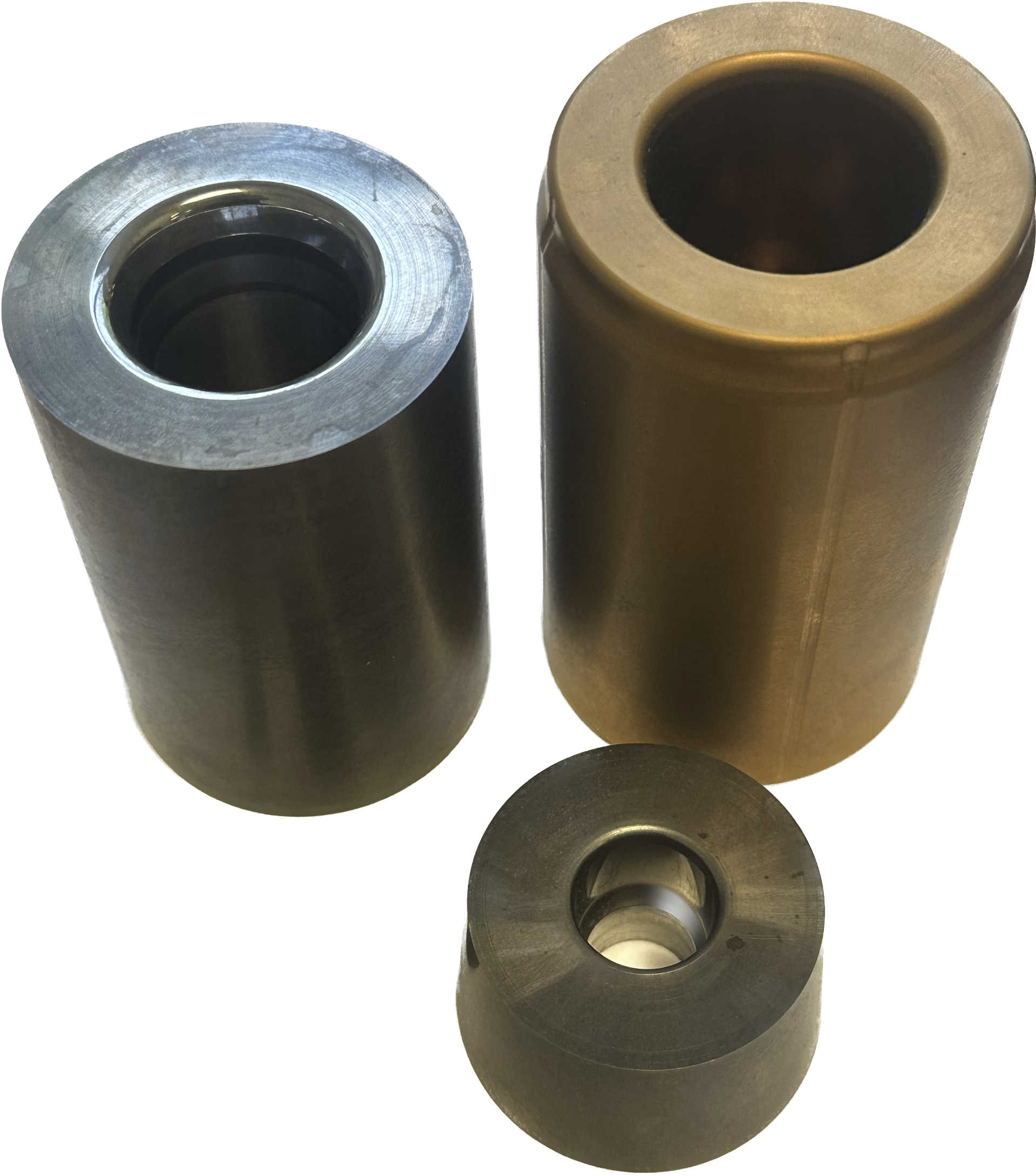


Inner Tooling
The Tungsten Mining Industry
The tungsten mining industry is the main ingredient in carbide manufacturing for carbide dies, munitions and tooling. Tungsten, known for its exceptional hardness and high melting point, plays an indispensable role in various industrial applications, including aerospace, electronics, manufacturing fasteners and energy production.
Tungsten, with its atomic symbol W (from Wolfram… a cool name), is a dense, metallic element that possesses remarkable properties, making it highly sought after in industrial and technological sectors. Its key attributes include:
Exceptional Hardness: Tungsten is renowned for its hardness and durability, ranking among the hardest natural elements. Only diamonds and some rubies are harder. This quality makes it ideal for cutting and drilling applications.
High Melting Point: Tungsten boasts one of the highest melting points of all elements, exceeding 3,400 degrees Celsius (6,152 degrees Fahrenheit). This property makes it a vital component in high-temperature applications like aerospace, munitions and electronics.
Electrical Conductivity: Tungsten is an excellent conductor of electricity, making it essential for electrical components, particularly in the semiconductor industry.
Tungsten is primarily extracted from tungsten-bearing minerals, most commonly wolframite and scheelite. The mining process involves several stages. First it is found through prospecting. Geologists identify potential tungsten deposits through geological surveys and exploration. Promising sites are selected for further evaluation which includes drilling for samples and analysis of the quality of the tungsten found.
Once a viable deposit is confirmed, mining operations commence. Traditional methods include open-pit and underground mining, depending on the ore’s depth and characteristics.
Once tungsten is extracted ore is crushed and subjected to various “beneficiation” processes to separate tungsten minerals from other rock materials. It is then smelted and refined. The refinement continues until pure tungsten is produced.
China is the world’s largest producer of tungsten, supplying a substantial portion of the global demand. The majority of China’s tungsten production comes from the Jiangxi and Hunan provinces. Other significant players in the market in Vietnam and Canada.
Tungsten carbide is then manufactured by adding cobalt to the mix and then sintering the combination at high heat to form blanks. These blanks are then formed into carbide dies, ammunition dies, cutting tools and more.
Carbide Dies, Punches and Tooling